

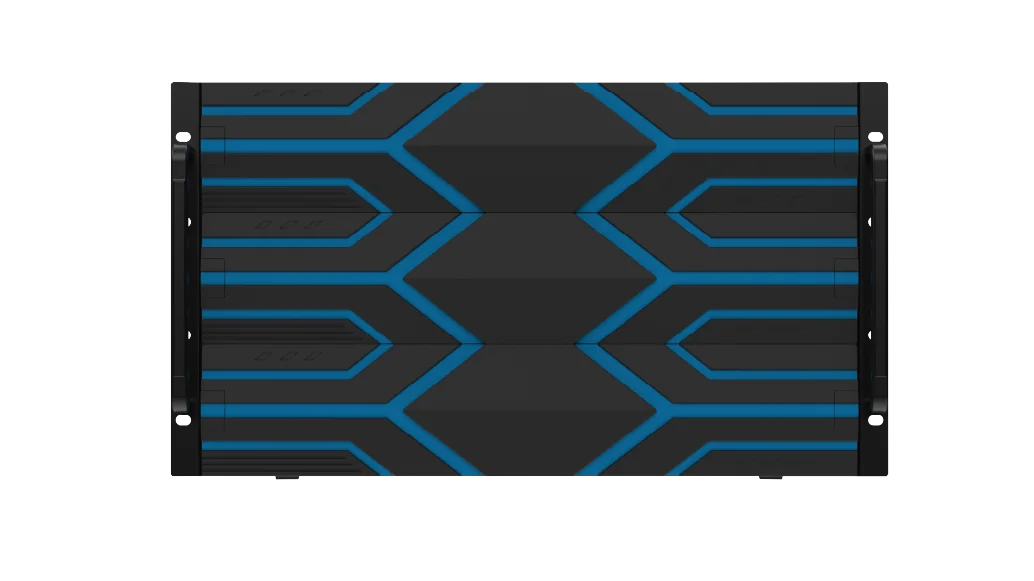
Large-format LED displays are widely used in stage performances, control rooms, exhibition halls, commercial spaces, and immersive visual environments. However, creating a single large image across multiple LED cabinets requires more than simply connecting several screens together. A professional control solution is needed to process, divide, and synchronize image signals accurately.
A video wall splicer is designed to combine multiple display outputs into one continuous visual canvas. It manages different input sources, processes high-resolution signals, and ensures that separate LED sections work together as a unified screen. For large LED projects that demand smooth images and reliable performance, the role of a video wall splicer is essential.
What Is a Video Wall Splicer?
A video wall splicer is a professional signal processing device used to create large images by combining multiple display areas. It receives video signals from different sources, processes the image data, and distributes the correct sections of the image to different LED screens or cabinets.
Unlike a standard video processor that mainly handles signal conversion and scaling, a video wall splicer focuses on multi-screen management. It allows multiple displays to operate as one large visual surface while maintaining consistent image alignment, brightness, and timing.
In modern LED applications, a video wall splicer is often used when the screen size exceeds the output capability of a single controller or when a project requires complex layouts. Kystar develops splicing processor solutions designed for professional environments such as stage performances, command centers, exhibition spaces, and large visual installations.
How Does a Video Wall Splicer Create a Seamless Image?
Processing Multiple Video Sources
The first function of a video wall splicer is managing different video inputs. Large LED displays often need to show content from cameras, media servers, computers, or other signal sources at the same time.
The splicer receives these signals and analyzes their resolution, format, and display requirements. It then processes the content so that each part of the LED wall receives the correct image information.
This processing capability is especially important for professional applications where multiple sources must be displayed simultaneously without delays or image distortion. Advanced splicing processors can support multiple input and output configurations to adapt to different project requirements.
Creating a Unified Display Canvas
The key feature of a video wall splicer is its ability to create a virtual canvas that represents the entire LED display. Instead of treating each cabinet or screen as an independent unit, the processor combines them into one coordinated image area.
When a video signal enters the system, the splicer divides the image according to the physical layout of the LED wall. Each output channel receives the correct portion of the content, allowing multiple screens to display different sections of the same image.
This process makes it possible to build extremely large LED displays while maintaining visual continuity. Whether the screen is arranged horizontally, vertically, or in a customized shape, the splicer helps ensure that the final image appears complete and natural.
The Technology Behind Seamless Image Splicing
Accurate Signal Synchronization
Synchronization is one of the most important factors in creating a seamless large-format image. If different LED sections receive signals at slightly different times, viewers may notice image tearing, delays, or uneven movement.
A professional video wall splicer maintains synchronization between output channels so that every part of the display updates at the same moment. This is especially important for live events, broadcast environments, and XR virtual production, where even small timing differences can affect the visual experience.
Kystar’s splicing processors support advanced synchronization features, including Genlock functions on selected models, helping complex display systems maintain accurate timing across multiple outputs.
Multi-Layer and Flexible Layout Control
Modern LED projects often require more than displaying one full-screen image. Operators may need to show several videos, graphics, or data sources in different areas of the same LED wall.
A video wall splicer provides flexible layout control by allowing multiple windows to be positioned, resized, and arranged on the display canvas. This makes the system suitable for applications that require dynamic content management.
For example, a command center may need several information sources displayed simultaneously, while a stage production may require different visual effects appearing in different sections of the LED background. Multi-layer management allows these creative requirements to be achieved efficiently.
Applications That Require Video Wall Splicing
Large LED Displays for Stage Productions
Concerts, festivals, and theatrical performances often use massive LED backgrounds to create immersive visual effects. These displays may consist of hundreds of cabinets that must work together perfectly.
A video wall splicer helps production teams manage large images, switch between scenes, and maintain stable playback during live performances. The ability to handle complex layouts makes it an important tool for modern stage design.
Control Rooms and Command Centers
Control rooms require clear and reliable information presentation. Large video walls allow operators to monitor multiple sources at the same time, including security feeds, operational data, and system information.
In these environments, a video wall splicer ensures that different screens operate as one large monitoring surface while maintaining accurate image quality and stable operation.
XR Virtual Production and Immersive Displays
Virtual production requires LED walls with precise image alignment and synchronization because cameras capture the displayed background directly. Any visible gap or inconsistency can reduce production quality.
A professional video wall splicer helps manage high-resolution content across large LED volumes, ensuring that different screen sections combine into a realistic and continuous background.
How to Choose the Right Video Wall Splicer?
Choosing a suitable video wall splicer depends on the size, resolution, and application requirements of the LED project. Users should consider the number of input sources, output capacity, supported resolutions, and control flexibility.
For high-end applications, processing capability is especially important. Large LED walls may require support for ultra-high-definition signals, multiple layers, and customized screen layouts. Kystar’s splicing processor solutions include models with modular designs and high-capacity processing options to support different professional scenarios.
System compatibility is another important factor. The splicer should work smoothly with LED controllers, sending systems, and other visual equipment to create a complete workflow.
Conclusion
A video wall splicer plays a critical role in transforming multiple LED sections into one seamless large-format image. Through signal processing, image mapping, synchronization, and flexible layout management, it allows complex LED displays to deliver continuous and high-quality visuals.
From stage performances and XR studios to command centers and commercial installations, professional splicing technology helps users build larger, more creative, and more reliable display systems. With advanced control solutions, Kystar supports the development of powerful LED visual experiences that meet the growing demands of modern display projects.
When selecting a video wall splicer, understanding the project’s resolution, content requirements, and future expansion needs can help ensure stable performance and long-term value.
