

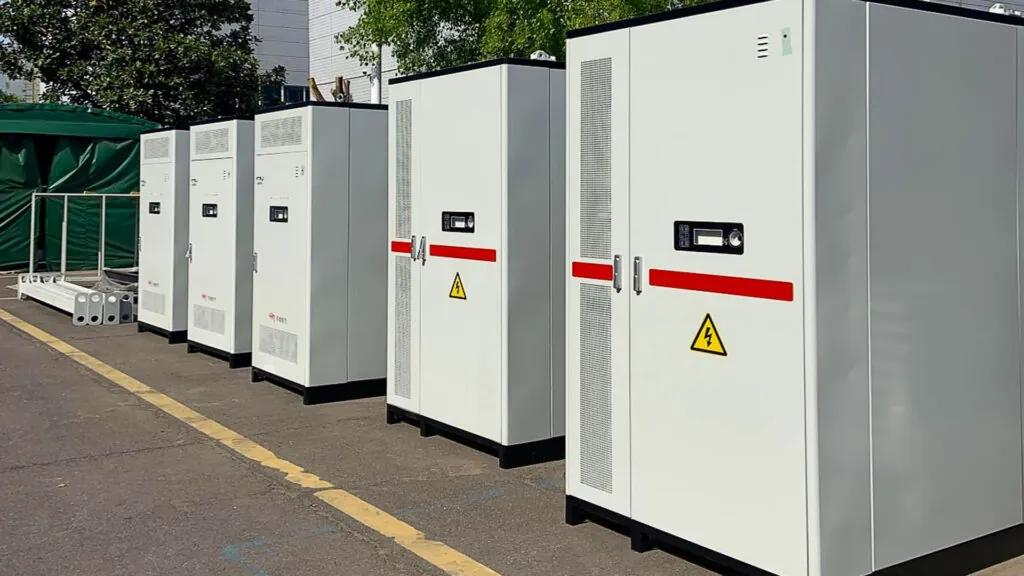
In commercial and industrial energy storage, continuous high-power operation creates significant thermal stress on core hardware — most notably the battery energy storage inverter. Without effective cooling, temperatures rise rapidly, causing sudden power derating, battery cell imbalance, and unexpected equipment failure.
Over time, this uncontrolled heat stress directly shortens system lifespans and increases overall operating costs. Modern thermal management helps integrators extend battery service life while maintaining reliable long-term system performance.
The Critical Physics of Thermal Stress in High-Power Systems
High-performance power conversion systems rely on high-speed switching semiconductor devices, such as Insulated Gate Bipolar Transistors (IGBTs). During high-frequency switching and bidirectional power conversion, these power semiconductors inevitably experience conduction and switching losses that produce heat.
If this thermal energy is not dissipated effectively, semiconductor junction temperatures may exceed their specified operating limits, increasing the risk of power derating, component degradation, and equipment failure.
Prolonged operation at elevated temperatures can accelerate component aging and increase the risk of thermal derating or unexpected failure. Furthermore, excessive internal thermal stress causes material fatigue in solder joints and wire bonds due to differing coefficients of thermal expansion within the power modules. Modern system designers must prioritize thermal management. Effective thermal management isn’t just a basic safety check—it directly impacts the overall Levelized Cost of Storage (LCOS). Precise heat dissipation pathing ensures that the system maintains high conversion efficiency, prevents premature component aging, and maintains system integrity throughout its long-term operational lifecycle.
Evaluating Cooling Architectures for Advanced Thermal Performance
When choosing an industrial partner, evaluating how an energy storage inverter supplier handles high thermal densities is crucial. Broadly, high-power systems utilize either forced air cooling or liquid cooling, and each has distinct advantages depending on the installation environment.
Forced-air cooling uses controlled airflow to remove heat from internal power components and heat sinks. It remains highly popular due to its mechanical simplicity, lower initial capital expenditure, and ease of maintenance in remote fields.
However, liquid cooling is increasingly used in high-power density C&I applications. Liquid-cooled systems utilize a closed-loop coolant cycle with specialized cold plates directly contacting high-heat components. This method can provide substantially higher heat-transfer capability than conventional air cooling, helping maintain more consistent temperatures across high-power components.
By analyzing these cooling pathways, system integrators can select the optimal thermal architecture for specific ambient conditions, ensuring that whether a system is deployed in a desert microgrid or a coastal industrial park, its thermal performance remains uncompromised.
Standards and International Certifications Governing Thermal Safety
High-power modular conversion systems must comply with rigorous international safety and environmental protection standards to ensure long-term reliability in harsh climates.
Major safety and grid-compliance frameworks require thermal safety and temperature-rise testing under sustained high-load conditions.
These evaluations ensure the inverter operates safely at full rated capacity across its specified ambient temperature limits without experiencing thermal runaway or safety-critical component degradation. To withstand harsh outdoor conditions, systems are built with robust enclosure protection that shields internal components from dust, moisture, and airborne contaminants. Designing a well-protected IP-rated enclosure while maintaining efficient thermal dissipation is a complex engineering challenge. It requires advanced thermal simulations and precise internal airflow or coolant loop routing to prevent localized hot spots.
The Strategic Advantages of Smart Modular Thermal Design
Beyond basic hardware cooling, modern industrial energy storage applications require intelligent software integration to actively monitor and regulate thermal states. Advanced Power Conversion Systems (PCS) employ real-time sensor networks that communicate continuously with the Energy Management System (EMS).
This integration allows for predictive thermal diagnostics and dynamic power derating. If ambient temperatures spike unexpectedly, the system can automatically reduce output power to maintain semiconductor temperatures within safe operational thresholds rather than triggering an abrupt, costly shutdown.
The modular architecture engineered by YUNT exemplifies this smart approach. YUNT’s Mars Series includes 100 kW, 110 kW, and 125 kW PCS modules in both air-cooled and liquid-cooled configurations. Modern PCS platforms may also use distributed temperature sensing and adaptive cooling control to manage fan speed or coolant flow according to operating conditions. YUNT offers both air-cooled and liquid-cooled Mars Series PCS modules, allowing integrators to select a configuration based on application and environmental requirements.
Engineering Insights: Thermal Design & Hardware Safety
Junction thermal resistance is a key factor affecting hardware service life, system safety, and overall project LCOS.
Closed-loop liquid cooling provides more effective heat dissipation and tighter temperature control in high-density commercial energy storage systems. In applications exposed to dust, moisture, or corrosive contaminants, suitable enclosure protection and material selection are also important for long-term reliability.
Real-time thermal monitoring helps manage power derating in a controlled manner and reduces the risk of unexpected shutdowns. Contact the YUNT engineering team to discuss liquid-cooled PCS configurations tailored to your application.
