

Outdoor lighting production is often influenced by fluctuations in raw material markets, including aluminum, electronic components, and optical plastics. For companies operating in this field, maintaining stable supply planning requires coordination across procurement, design, and manufacturing. Manufacturers such as Keyida Lighting, which focus on modern outdoor wall solutions, typically adapt their sourcing strategies to maintain consistent product performance while managing cost variability across different project demands in international B2B projects.
Custom Outdoor Lighting Material Cost Strategy
They manage procurement planning by aligning product structure with material availability cycles. In custom outdoor lighting, aluminum housing and PC or acrylic covers are commonly selected due to their balance between durability and cost stability. Keyida Lighting, as a manufacturer with a 7000㎡ workshop, adjusts production scheduling to match bulk orders and reduce exposure to short-term price volatility across metal and electronic supply chains.
Procurement Diversification in Outdoor Lighting Supply Chains
In the outdoor lighting industry, procurement diversification is widely adopted to reduce exposure to fluctuating raw material costs. Many outdoor landscape lighting manufacturers establish long-term agreements with suppliers of aluminum materials and LED chips, helping to stabilize pricing and ensure continuity in production planning.
At Keyida Lighting, this approach is integrated into our OEM and ODM cooperation model. We adjust product specifications based on available component sourcing while maintaining core functional requirements such as waterproof performance and energy efficiency. This flexibility allows us to respond to project-level demands without disrupting system consistency.
Design Flexibility and Component Standardization Strategy
Risk control in product development is often achieved through a high degree of internal standardization. Core elements such as LED modules and driver systems are unified across multiple product series, even when fixture designs differ in appearance or application scenarios.
This strategy is especially important in custom outdoor lighting projects, where architectural requirements vary but electrical architecture must remain consistent. At Keyida Lighting, modular design principles are applied to ensure compatibility across CCT and RGB configurations, while also simplifying maintenance and replacement processes for B2B clients.
Supply Chain Coordination in LED Component Sourcing
They maintain close coordination with LED chip and driver suppliers to reduce disruption risks caused by global commodity fluctuations. In outdoor landscape lighting manufacturers, product planning often depends on forecasting raw material availability and adjusting production batches accordingly. Keyida Lighting’s export-oriented operations to Europe and the Middle East require flexible scheduling to meet different certification and delivery requirements.
Material Quality Control and Cost Efficiency
Cost control in outdoor lighting manufacturing is closely linked to the efficiency of quality management systems. In die-casting and surface finishing processes, manufacturers reduce material waste by applying stricter inspection standards and optimizing production consistency across batches.
Key components such as aluminum housings and PC lampshades undergo dimensional and surface checks before entering the assembly stage. This helps ensure structural uniformity and reduces variation during final product integration.
At Keyida Lighting, additional pre-paint polishing and coating treatments are applied to enhance surface durability. This process improves resistance to environmental wear, which in turn helps lower long-term maintenance requirements for outdoor lighting installations in both commercial and residential projects.
Smart Features and Market Adaptation
They adjust product positioning based on regional demand trends, incorporating features such as PIR motion sensing and radar detection for energy efficiency. CCT and RGB lighting options are included in many product lines to meet varying project requirements. Keyida Lighting structures its product development cycles quarterly, allowing them to respond to shifting preferences in architectural and landscape lighting projects.
Export Compliance and Certification Alignment in Global Markets
Export-oriented outdoor lighting projects require strict alignment between product certification and regional regulatory frameworks. Markets such as Europe, North America, and the Middle East typically require compliance with standards including CE, RoHS, and SAA, which directly influence customs clearance efficiency and project approval processes.
At Keyida Lighting, documentation support is integrated into the procurement workflow. Technical materials such as 2D drawings, installation manuals, and specification sheets are prepared for B2B clients to support engineering review and project planning during early-stage procurement discussions.
Cost Stability Practices in Long-Term Lighting Projects
In long-term outdoor lighting projects, maintaining cost stability depends on structured budgeting and coordinated supply planning. Project demand is often managed through phased production scheduling, which helps balance fluctuations in order volume while maintaining consistent material allocation.
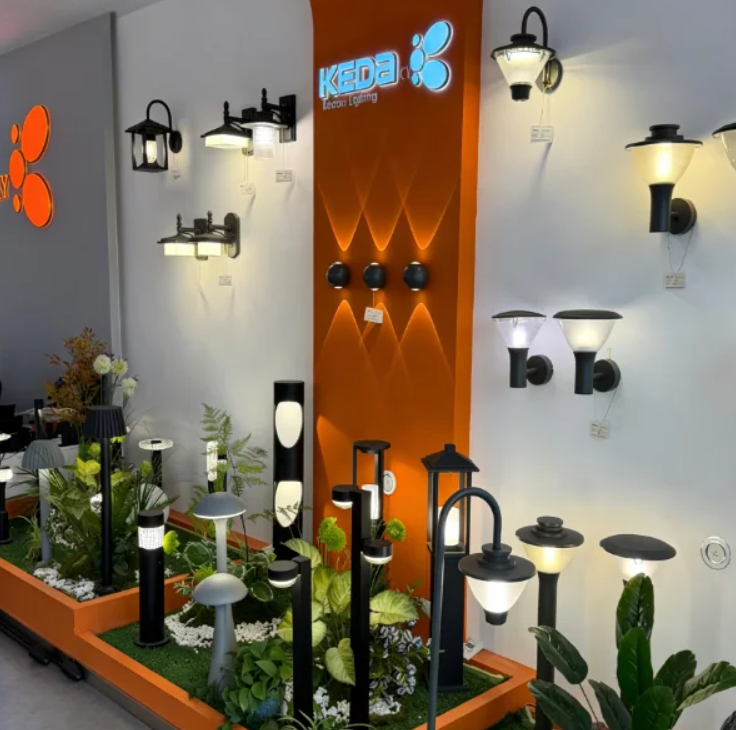
Keyida Lighting leverages its 1100㎡ showroom and export experience to better align client expectations with realistic delivery timelines. This approach also supports stable sourcing strategies across different regions, ensuring that production planning remains consistent even when project requirements vary.
Supply Chain Buffering and Risk Management Strategy
Supply chain resilience is often achieved through buffering strategies for critical components. Key materials such as aluminum profiles and LED drivers are maintained at controlled inventory levels to reduce exposure to upstream price volatility and supply disruptions.
Keyida Lighting coordinates closely with logistics partners to optimize shipment scheduling based on production cycles and destination requirements. This helps ensure that export orders maintain stable delivery performance across different international markets, even under fluctuating supply conditions.
Procurement Forecasting and Seasonal Planning
They analyze historical demand patterns to forecast procurement needs for aluminum, PC materials, and electronic components. Seasonal fluctuations in construction and renovation projects influence ordering cycles. Keyida Lighting uses its OEM and ODM capabilities to adjust product specifications in advance of peak demand periods, helping reduce the impact of sudden cost increases in raw material markets while coordinating with suppliers across multiple regions.
R&D Adaptation to Material Substitution in Outdoor Lighting Systems
In outdoor lighting development, material substitution is often explored as a practical method to manage cost fluctuations while maintaining product performance. Adjustments such as different aluminum grades or PC diffuser variations can help stabilize procurement costs without significantly affecting functional output.
At Keyida Lighting, product lines including CCT and RGB outdoor fixtures are designed with a flexible engineering structure. This allows controlled component adjustments during production while maintaining consistent lighting performance standards required in B2B engineering projects. Each modification is validated through iterative design review before implementation.
Digital Systems for Cost Monitoring and Production Planning
Real-time monitoring of raw material prices and production cost variations plays an important role in manufacturing decision-making. Internal tracking systems help coordinate procurement strategies with production planning to reduce uncertainty in cost management.
Keyida Lighting operates with structured data collected across its 7000㎡ production base and 1100㎡ showroom operations. This operational data supports more informed pricing alignment and enables more stable sourcing decisions across different project cycles and market conditions.
Integrated Supply Chain Coordination in Industrial Practice
Managing raw material price fluctuations in outdoor lighting requires coordination across procurement, design, and production rather than isolated cost control measures. A unified approach helps maintain operational stability even when external market conditions change.
By combining standardized component systems, adaptable product design, and long-term supplier collaboration, Keyida Lighting maintains continuity across its manufacturing and export processes. This structured approach supports B2B lighting projects that require consistent performance and supply reliability across different international markets.
