

Presbyopic vision correction relies heavily on optical clarity and glare reduction across daily reading distances. Partnering with established wholesale reading glasses manufacturers enables retail brands to offer enhanced visual comfort through specialized thin-film lens treatments. Examining the physics behind anti-reflective, hydrophobic, and blue-light filtering layers reveals how modern optical surface engineering transforms basic reading lenses into high-value functional eyewear.
Physics of Anti-Reflective Optical Thin Films
Atmospheric light reflection on untreated plastic lenses reduces total light transmission while creating distracting mirror effects. Lens options include anti-reflective, anti-blue light, and polarized coatings to suit different visual needs and environments. Destructive interference cancels internal reflections, allowing up to ninety-nine percent of visible light to pass through the optical substrate directly to the retina.
Minimizing surface glare decreases visual fatigue during prolonged reading sessions or computer use. Optical distributors sourcing from wholesale reading glasses manufacturers often request customized lens options, including anti-reflective and anti-blue light coatings. Visual clarity combined with reduced ghost imaging increases consumer satisfaction across retail channels.
Blue-Light Attenuation Mechanics for Digital Readers
High-energy visible (HEV) blue light ranging between four hundred and four hundred and fifty nanometers causes digital eye strain during extended screen exposure. Specialized blue-blocking coatings utilize vacuum-deposited dielectric layers to reflect harmful short-wavelength light away from the eyes. Alternative substrate-tinting methods absorb blue spectrum waves directly within the polymer matrix before reaching the wearer.
Balancing blue light reflection with color neutrality remains crucial for preserving natural color perception. Lenses engineered with targeted cutoff thresholds isolate problematic blue-violet frequencies without casting an unnatural yellow tint over printed text or digital displays. Precision spectral tuning provides comfortable reading experiences during long work hours.
Hydrophobic and Oleophobic Surface Protection
Daily handling leaves fingerprints, facial oils, and environmental dust on lens surfaces, obscuring optical clarity. Applying fluoropolymer outer coatings alters the surface energy of the lens, increasing the water contact angle above one hundred degrees. Elevated contact angles cause liquid droplets to roll off clean plastic surfaces without leaving streaky residue.
Oleophobic properties prevent skin lipids from adhering tightly to the lens, simplifying daily cleaning routines. Adding super-hydrophobic surface layers protects delicate underlying anti-reflective coatings from scratch damage during friction cleaning. Durability enhancements prolong the functional lifespan of budget-friendly reading eyewear.
Hard Coating Processes and Scratch Resistance
Standard optical-grade acrylic or polycarbonate substrates offer lightweight comfort but possess relatively low surface hardness. Thermally cured polysiloxane hard coatings generate a protective ceramic-like shell over raw plastic lenses. Dip-coating or spin-coating application methods yield consistent liquid film thickness across spherical and aspheric lens curves.
Cross-linked siloxane networks increase scratch resistance ratings, protecting lenses against accidental drops or abrasive contact inside pockets and purses. Hard coats serve as a necessary adhesive foundation before applying secondary vacuum-deposited anti-reflective layers. Solid bonding prevents coating delamination under environmental stress.
Integration in Bulk Plastic Reading Glasses
Commercial viability in high-volume retail programs depends on pairing functional lens coatings with durable, cost-effective frame structures. Utilizing injection-molded plastic components enables uniform mass production while maintaining tight dimensional tolerances around lens bevels. Balanced frame geometry prevents mechanical pressure from distorting coated lens surfaces.
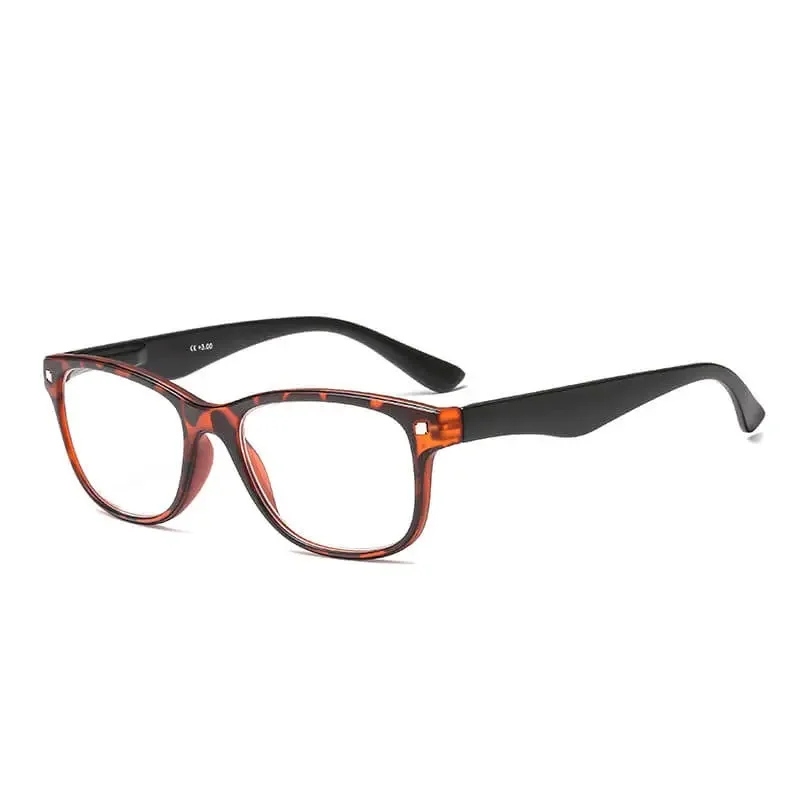
Sourcing models like Affordable Wholesale Plastic Reading Glasses offers distributors square unisex frames with a 55-18-140 sizing profile. Manufactured with lightweight plastic, these ready-stock models accommodate customized magnification strengths alongside specialized coating options. Scalable plastic assembly lines keep unit costs low while supporting versatile retail requirements.
Factory Coating Processes and Quality Assurance
Executing precision lens treatments requires cleanroom conditions and automated physical vapor deposition (PVD) chambers. Automated optical inspection machinery scans finished lenses for micro-scratches, coating pinholes, and uniform film thickness. Spectrophotometer testing verifies spectral transmittance curves to confirm precise UV and blue-light filtering metrics.
Quality verification protocols practiced by JHEYEWEAR evaluate coating adhesion through cross-hatch tape tests and artificial sweat immersion trials. Modern production lines maintain compliance with international regulatory standards, including CE, FDA, ISO 9001, BSCI, SEDEX, and GRS certifications. Strict laboratory controls verify coating durability across diverse export shipments.
Customization Flexibility and Private Label Production
Private label optical programs demand versatile customization options to match varied market positioning strategies. Wholesale clients can specify lens magnification powers, custom frame colorations, printed logos, and branded packaging structures. Flexible manufacturing capabilities allow brands to adapt standard designs into distinct product lines.
Operational infrastructure at JHEYEWEAR supports ready-stock wholesale orders starting from 300 pieces, alongside full OEM and ODM customization projects with minimum order quantities from 300 to 600 pieces per style. Access to an extensive design catalog covering over 5,000 distinct styles streamlines product sourcing for optical importers and pharmacy chains. Efficient factory workflows maintain steady order lead times.
Global Market Distribution and Export Compliance
Navigating international trade regulations demands clear material traceability and compliant optical safety documentation. Bulk shipments entering North American, European, and Latin American markets require verified UV400 protection reports and non-toxic material safety data. Complete compliance documentation simplifies customs clearance procedures for global optical buyers.
Partnering with experienced wholesale reading glasses manufacturers streamlines bulk procurement through integrated supply chain management. Factory-direct export operations handle custom packaging, barcode labeling, and international freight logistics. Reliable manufacturing partnerships help optical distributors scale commercial reading glass programs with consistent quality standards.
Conclusion
Evaluating functional lens coatings, scratch-resistant hard coats, and scalable frame manufacturing provides optical buyers with clear strategies for expanding reading eyewear collections. Sourcing through JHEYEWEAR connects distributors with versatile OEM/ODM capabilities, GRS-certified sustainable options, and rigorous laboratory testing across high-volume production runs. Advanced surface treatments combined with reliable manufacturing frameworks help optical businesses deliver comfortable, high-performing reading glasses to global retail markets.
