

Warehouse lighting affects more than visibility. It influences worker safety, picking accuracy, energy consumption, maintenance schedules, and the overall cost of facility operations. For facility managers responsible for large distribution centers and industrial warehouses, an effective lighting strategy must balance illumination quality with installation costs and long-term reliability. A structured approach to lighting assessment, equipment selection, and maintenance helps businesses improve working conditions while controlling operating expenses.
Assess Warehouse Lighting Requirements by Work Area
A warehouse rarely has uniform lighting needs. High-bay storage areas, picking stations, packing lines, loading docks, inspection benches, and pedestrian routes serve different purposes. Facility managers should evaluate each zone according to its tasks, ceiling height, operating schedule, and potential safety risks.
Lighting assessments should measure existing illuminance, identify dark spots, and examine glare and shadows between shelving rows. Areas requiring detailed visual inspection may need more focused illumination than general storage spaces. Applicable local standards and workplace safety requirements should guide target light levels. Decision-makers should not rely on a single brightness specification for the entire building.
OSHA identifies adequate lighting around conveyors and illuminated exit routes as important warehouse safety considerations. A professional assessment can help managers address these needs before selecting replacement fixtures.
Choose Efficient Fixtures and Suitable Lighting Distribution
LED technology offers an opportunity to reduce electricity consumption and replacement frequency compared with many conventional lighting technologies. However, purchasing decisions should consider more than wattage. Luminous efficacy, measured in lumens per watt, helps buyers compare how efficiently fixtures convert electrical power into visible light.
For warehouses with long aisles and repetitive layouts, linear lighting systems can provide continuous illumination along work areas. High-bay fixtures may suit open spaces with high ceilings, while specialized fittings can address demanding environments. Photometric data and lighting simulations help determine fixture spacing, mounting positions, and light distribution before installation.
When evaluating LED light trunking, facility managers should examine the system’s electrical configuration, connection method, compatibility with controls, and suitability for the existing building. A well-designed system can simplify installation while maintaining consistent lighting coverage across extended warehouse layouts.
Integrate Lighting Controls Into Daily Operations
Warehouses often operate for extended hours, but not every area remains occupied throughout every shift. Lighting controls can reduce unnecessary electricity use by adjusting illumination to occupancy, daylight availability, or operational schedules.
Occupancy sensors may be suitable for infrequently accessed storage zones, while dimming controls can help manage changing requirements in selected work areas. Daylight-responsive controls may also benefit facilities with skylights or suitable windows. Their effectiveness depends on sensor placement, control settings, and the activities taking place beneath the fixtures.
The U.S. Department of Energy recommends considering strategies such as occupancy sensing, task tuning, and daylight dimming when selecting commercial and industrial LED luminaires. Before deployment, managers should confirm that controls respond appropriately to forklift movements and other operational patterns without compromising visibility.
Evaluate Installation and Maintenance Costs Together
The purchase price represents only one part of a warehouse lighting project’s total cost. Installation labor, wiring, access equipment, downtime, energy consumption, replacement components, and maintenance visits can significantly affect the investment over time.
A useful evaluation compares the existing system with proposed alternatives across their expected service lives. Managers should document current electricity use, fixture quantities, maintenance frequency, and energy tariffs before estimating savings. Post-installation measurements can then establish whether the project delivers its intended results.
Integrated LED lighting solutions for warehouse environments may help simplify large-scale retrofits. This is especially true when their design reduces connection complexity and supports consistent installation methods. Nevertheless, projected savings should be verified against the actual project scope, site conditions, and supplier documentation rather than assumed from general marketing figures.
Consider Trunking Systems for Large-Scale Retrofits
Replacing conventional fluorescent battens or individual high-bay fixtures can involve substantial coordination across a large facility. An integrated trunking system offers another approach by combining lighting installation with a continuous electrical infrastructure designed to accommodate connected luminaires.
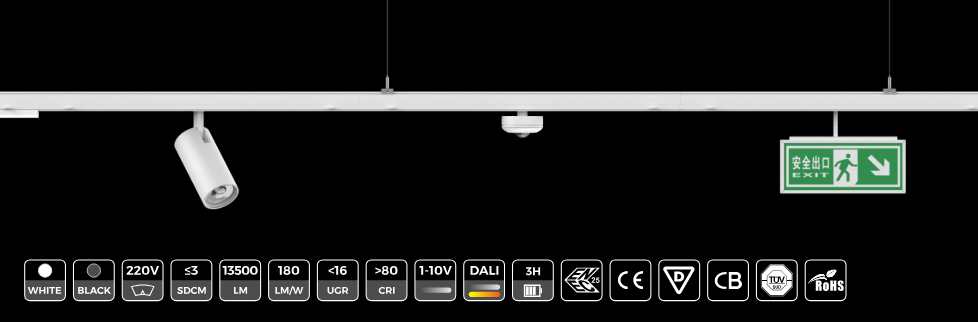
TRIECO specializes in LED lighting retrofits for industrial facilities, warehouses, retail stores, offices, and educational institutions. Its flagship Fixed Style Trunking Light System is designed around three stated advantages: high capacity, long cascading connections, and simplified installation. The system aims to address challenges associated with complex wiring, installation time, and ongoing maintenance.
According to the supplied product information, the system can reduce wiring costs by over 70% compared with traditional T8 batten lights and high-bay fixtures. Facility managers should request the comparison methodology, installation assumptions, and project-specific quotation before applying that figure to a business case.
When assessing LED light trunking, buyers should also confirm connection limits, electrical loading, fixture compatibility, emergency-lighting provisions, and maintenance access. These checks help determine whether the proposed configuration fits the facility’s requirements and applicable regulations.
Establish a Preventive Lighting Maintenance Plan
LED installations still require periodic inspection. Dust accumulation, damaged fittings, failed drivers, loose connections, and declining light output can affect performance even when fixtures remain operational. Warehouses with high ceilings should establish safe access procedures and coordinate inspections with routine equipment maintenance.
Facility managers should record fixture locations, installation dates, control settings, and inspection findings. Periodic illuminance measurements can identify areas where output has deteriorated or storage layouts have changed. Cleaning intervals should reflect actual dust levels and manufacturer recommendations, while electrical work should be performed by qualified personnel under appropriate safety procedures.
A documented maintenance schedule also makes budgeting more predictable. Rather than waiting for workers to report poor visibility, managers can use inspection records to prioritize repairs and plan replacements before lighting deficiencies disrupt operations.
Build a Warehouse Lighting Strategy Around Measurable Results
Effective warehouse lighting combines appropriate illumination, efficient equipment, responsive controls, and disciplined maintenance. Facility managers who assess individual work zones and compare lifecycle costs are better positioned to make sound investment decisions.
For businesses planning a retrofit, LED lighting solutions for warehouse operations should be evaluated against measurable criteria, including energy use, installation requirements, lighting uniformity, and maintenance needs. TRIECO’s Fixed Style Trunking Light System offers one integrated option for facilities seeking to simplify large-scale lighting installations. A site assessment, verified technical specifications, and a realistic cost analysis can help determine whether it is the right fit.
