

Selecting the right protection method is an important part of designing and maintaining a dependable electrical system. Circuit breakers and fuses both protect circuits from abnormal current, but they work in different ways and offer different advantages. Understanding these differences helps engineers, installers, and purchasing teams choose electrical control products that match the application, maintenance requirements, and operating environment.
How Circuit Breakers and Fuses Protect Electrical Circuits
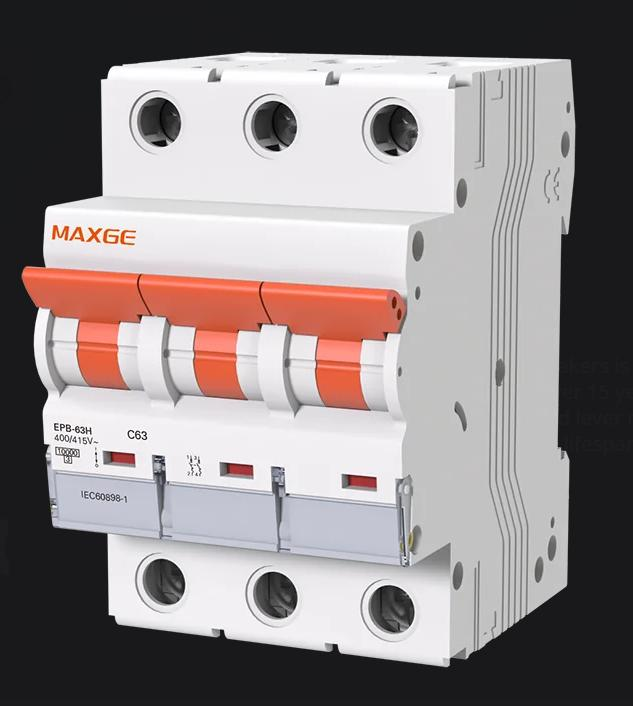
A circuit breaker is a resettable protection device designed to interrupt current when an overload or short circuit occurs. Depending on the application, different breaker types can be selected for terminal circuits, distribution systems, industrial equipment, or larger electrical installations. MCBs are commonly used for smaller circuits, while MCCBs and ACBs are designed for higher current and more demanding distribution applications.
A fuse provides protection through a fusible element. When excessive current flows through the element, heat causes it to melt and open the circuit. This straightforward operating principle makes fuses useful where dependable overcurrent protection is required. A suitable fuse base or base mount fuse holder provides the mechanical and electrical connection needed to install and replace the fuse safely.
Both approaches can provide effective short-circuit and overload protection when correctly specified. The better choice depends on the system rather than simply selecting one technology for every application.
Key Factors When Comparing Protection Options
One of the first considerations is reset and replacement. A circuit breaker can generally be reset after a fault has been cleared, which can reduce downtime during routine operation. A fuse must normally be replaced after it operates. For installations where access is difficult or interruptions are costly, the resettable nature of a breaker may offer practical advantages.
Space and installation requirements also matter. Modular circuit breakers can simplify installation within distribution boards and control panels. Fuse systems can provide a compact approach to overcurrent protection, particularly when the required fuse and holder are selected as a matched combination.
The expected fault current is another critical factor. Engineers should check rated current, voltage, breaking capacity, protection characteristics, and coordination requirements before selecting a circuit protection device. These parameters help ensure that the protective component can safely interrupt the fault current expected at its installation point.
Maintenance should also be considered. Breakers can provide convenient switching and isolation functions depending on their design and accessories. Fuses require access to replacement components and appropriate procedures for identifying and installing the correct rating.
Matching Protection to Different Applications
Modern electrical systems often require more than one protection technology. Terminal distribution may use MCBs or RCBOs, while larger distribution systems may require MCCBs or ACBs. Industrial equipment may combine circuit breakers with contactors, thermal relays, and other electrical control products to address both protection and operational control.
Fuses remain useful in applications where their current-limiting characteristics and straightforward construction are appropriate. In new energy systems, for example, DC protection requires components specifically designed for the characteristics of direct current. MAXGE offers DC protection products including DC MCBs, DC SPD and fuse combinations, and DC MCCBs for photovoltaic and energy storage applications.
The installation method should be evaluated alongside the protective component. A fuse without a properly matched holder can create unnecessary installation and maintenance concerns. MAXGE’s EPF series includes fuse holders designed for low-voltage protection applications, providing a dedicated mounting solution for compatible fuses.
Why System-Level Selection Matters
Choosing protection based only on rated current can lead to an incomplete design. Engineers should consider the circuit’s operating characteristics, prospective short-circuit current, selectivity, installation environment, maintenance access, and future expansion.
Circuit breaker solutions can also be combined with accessories and monitoring functions to support more flexible electrical systems. MAXGE’s product range covers MCB, RCD and RCBO, MCCB, ACB, smart breakers, new energy devices, distribution boxes, and industrial devices, allowing different protection requirements to be addressed within a broader product portfolio.
For projects involving multiple circuits, selecting compatible products across the protection system can simplify procurement and installation while helping maintain consistent technical requirements.
Build a Practical Protection Strategy
There is no universal answer to whether circuit breakers or fuses are better. Circuit breakers can be useful where reset capability, switching functions, and integration with a broader protection system are required, while fuses may suit applications where their current-limiting characteristics, compact form, or replacement method align with the system requirements.
The selection process should begin with the complete electrical system rather than an individual component. Current ratings, prospective fault levels, coordination, installation space, environmental conditions, maintenance practices, and future expansion can all influence the appropriate protection approach. MAXGE develops low-voltage electrical solutions for residential, commercial, and industrial applications, as well as protection solutions for PV, energy storage, and EV charging systems.
Supported by its R&D team, smart manufacturing capabilities, and automated production at its Deqing and Wuhu bases, MAXGE combines product development with testing resources including CNAS-related laboratory capabilities and international certifications. For product specifications, application requirements, or suitable circuit protection solutions, you can contact MAXGE through its official website to discuss your specific electrical system.
