

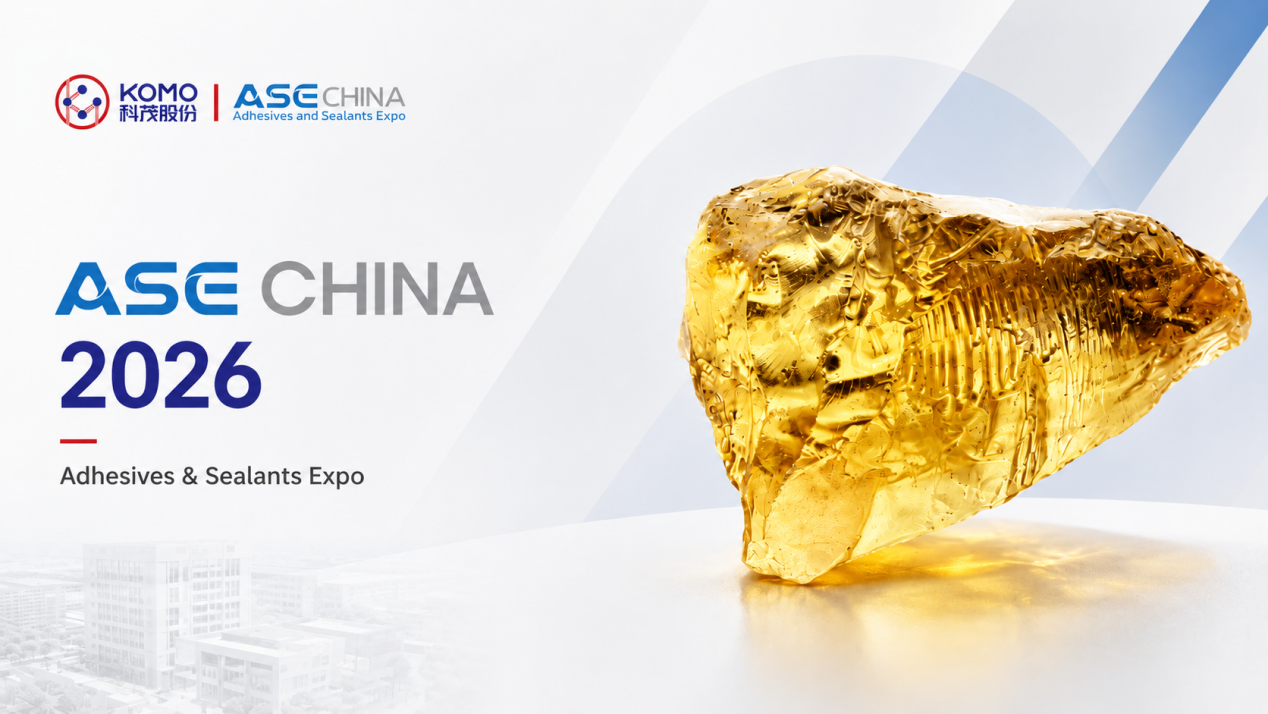
For rubber adhesive formulators, selecting the right tackifier requires more than comparing natural and synthetic origins. The key consideration is how the resin interacts with the rubber polymer, solvent system, substrate, and final bonding requirements. Pine rosin derivatives and petroleum-based tackifiers provide different chemical characteristics that may influence compatibility, wetting, and adhesive performance.
At China Adhesives Expo, KOMO will present its rosin-based resin materials at Booth E1562, where visitors can discuss tackifier selection, formulation requirements, and application challenges with the technical team.
Why Tackifier Chemistry Matters in Rubber Adhesives
A tackifier is not the primary structural component of an adhesive. Instead, it modifies the adhesive system by adjusting tack, wetting behavior, flow properties, and compatibility between different formulation components.
Rosin resin products supplied by KOMO are used as formulation ingredients for industrial adhesive systems. The selection process depends on factors such as rubber type, solvent conditions, required tack level, and the target balance between adhesion and cohesion.
For rubber adhesive applications, resin polarity is an important consideration. A tackifier with suitable compatibility can improve mixing and bonding behavior, while poor compatibility may lead to instability or reduced adhesive performance.
Pine Rosin and Petroleum Tackifiers: Different Chemical Origins
Pine rosin is derived from natural pine resources and contains resin acids that can be chemically modified through processes such as esterification, hydrogenation, and other treatments. These modifications create different resin structures with different application characteristics.
Petroleum-based tackifiers, including hydrocarbon resins, are produced from petroleum-derived raw materials and are widely used in adhesive formulations, particularly where compatibility with non-polar polymer systems is required.
The comparison between these two resin categories is not simply about natural versus synthetic materials. The more important factor is whether the tackifier chemistry matches the polymer structure and formulation requirements.
How Rosin Resin Supports Rubber Adhesive Formulations
A rosin resin can influence adhesive performance by changing the interaction between the tackifier and rubber polymer. Important selection factors include polarity, softening point, viscosity, color, and compatibility with the base polymer.
Different rubber systems require different resin characteristics. A tackifier suitable for natural rubber may not provide the same formulation behavior in synthetic rubber systems such as SBS, SBR, or CR.
KOMO’s solvent-based adhesive resin range includes grades designed for systems such as SBS adhesives, polychloroprene adhesives, and acrylic pressure-sensitive adhesives. The recommended grade depends on the polymer system and required adhesive properties.
Compatibility Determines Adhesive Performance
Compatibility is one of the most important factors in tackifier selection. A rubber adhesive requires a stable combination of polymer, resin, solvent, and additives.
If the tackifier has suitable compatibility with the rubber phase, it can support better wetting and tack development. However, excessive resin addition or unsuitable compatibility may affect cohesion, ageing behavior, and long-term adhesive performance.
KOMO’s tackifier products include gum rosin-based and modified gum rosin-based materials designed for different polymer systems. Some modified rosin esters are developed through processes including hydrogenation, esterification, and stabilization to adjust properties such as ageing resistance and compatibility.
Why Rosin Resin Can Be Considered for Polar Rubber Systems
Compared with many hydrocarbon tackifiers, rosin-based materials have different chemical structures because they originate from resin acids. This difference can influence interaction with certain polymers and substrates.
For polar rubber adhesive systems, formulators may consider rosin-derived tackifiers because their polarity and compatibility characteristics can provide useful formulation options.
However, resin selection should not rely only on the raw-material source. The final result depends on polymer type, tackifier structure, formulation ratio, processing temperature, and application requirements.
Choosing the Right Tackifier Grade
When selecting a tackifier for rubber adhesives, formulators should evaluate several factors:
- Polymer compatibility
- Softening point
- Acid value
- Color requirements
- Processing temperature
- Tack and cohesion balance
A higher tack value alone does not define a successful adhesive formulation. The resin must work together with the polymer and other ingredients to achieve the required performance.
KOMO provides rosin-based tackifying resins for industrial adhesive applications, allowing formulators to compare different grades according to their specific systems rather than selecting materials based on one property alone.
Sustainable Considerations in Rosin-Based Tackifiers
As industries explore renewable raw materials, pine-derived resins have received increased attention as bio-based formulation components.
However, sustainability considerations should be combined with technical requirements. A renewable-origin resin still needs to meet compatibility, processing, and performance expectations for the intended adhesive system.
The suitability of a tackifier depends on both its chemical origin and its behavior inside the final formulation.
Meet KOMO at China Adhesives Expo
KOMO supplies rosin-derived tackifying materials for industrial adhesive applications rather than finished adhesives. Its resin products are used as formulation components for systems including hot-melt adhesives, pressure-sensitive adhesives, and rubber-related adhesive applications.
At Booth E1562, visitors can learn more about pine rosin materials and discuss how different rosin-based tackifiers may fit specific rubber adhesive formulations.
The difference between pine rosin and petroleum tackifiers is not simply natural versus synthetic. The correct choice depends on resin chemistry, polymer compatibility, processing conditions, and the performance requirements of the final adhesive system.
